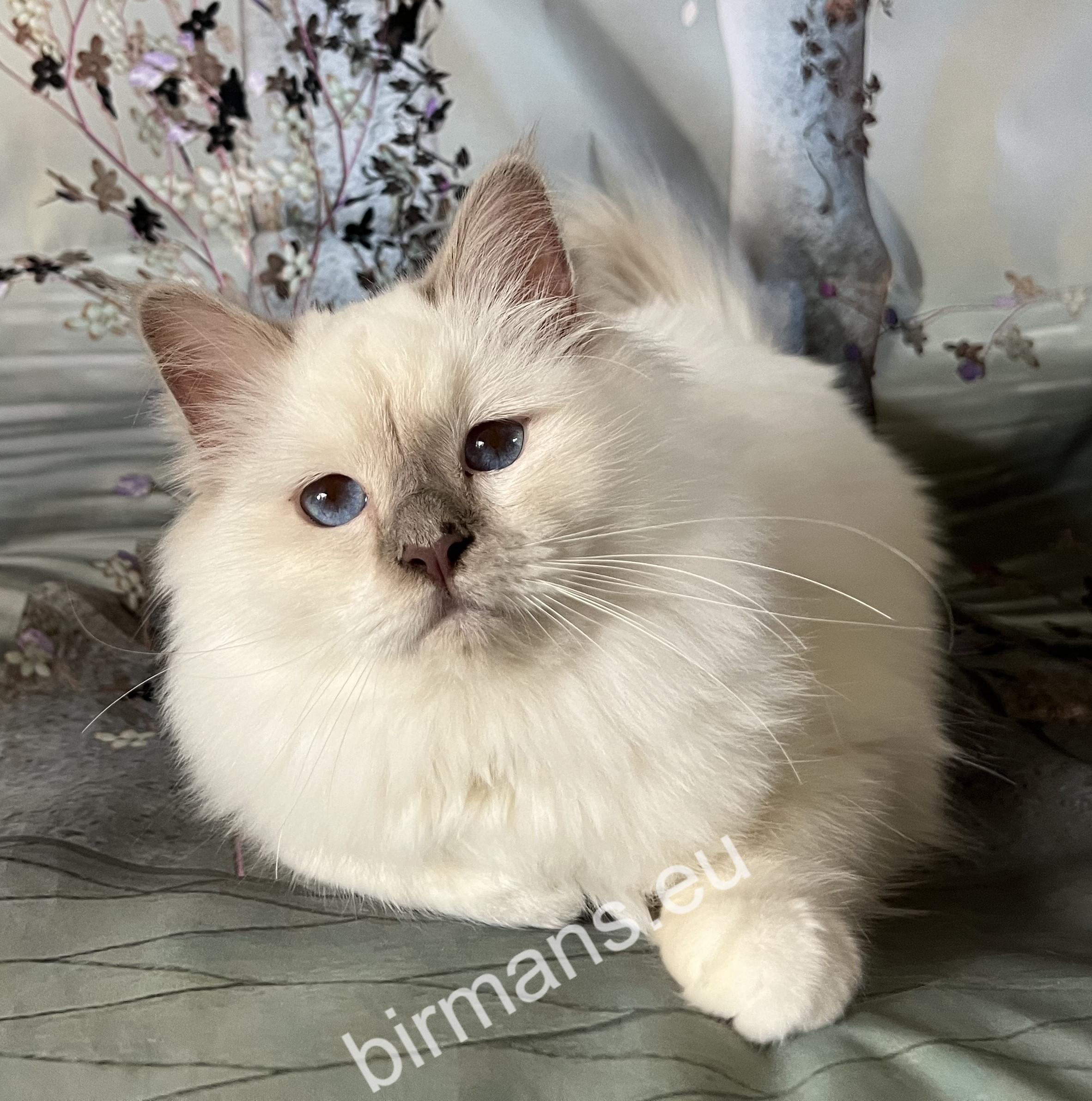
When someone is looking for a Birman cat, one of the first questions is almost always the same:
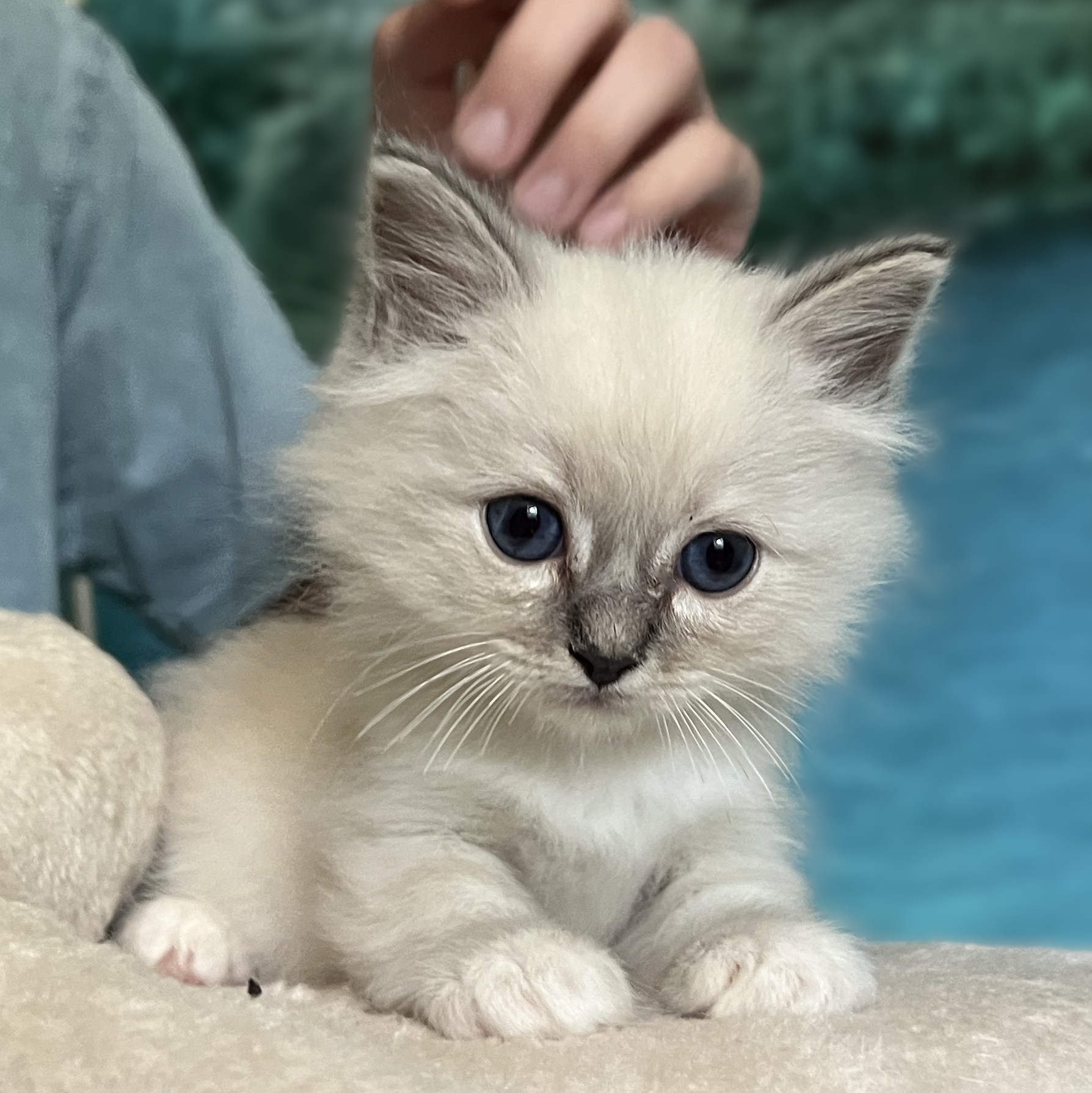
How much does a Birman cat cost?
This is completely understandable. A family wants to know what cost to expect, and what it actually means when a Birman kitten is priced at €1,200, €1,500, €2,000, or even higher.
However, the answer is not just a number.
The real question is rather:
What does the price include – and what doesn’t it?
Two Birman kittens may look similar on the outside. Behind the scenes, however, there may be completely different breeding work, health systems, bloodlines, living environments, socialization, and long-term responsibility.
How much does a Saba Birman kitten cost in 2026?
At Saba Birman cattery, the price of a Birman kitten intended as a family pet in the first half of 2026 typically ranges:
between €2,000 and €2,500.
This price may also depend on the kitten’s bloodline, appearance quality, personality, and intended purpose.
Important: this price applies to the first half of 2026. Prices may change in the second half of the year, as breeding costs are influenced by veterinary care, screenings, quality nutrition, housing conditions, and the overall economic environment.
Why shouldn’t you only look at the price?
A Birman kitten is not a product that can be compared solely based on price.
Behind a kitten, there is:
- the genetic background of the parents,
- the multi-generational quality of the bloodline,
- the breeder’s professional history,
- the system of veterinary and genetic screenings,
- the living environment,
- the socialization,
- the kitten’s personality,
- the pedigree and official documentation,
- as well as the breeder’s responsibility, which does not end on the day of handover.
Therefore, when comparing prices, the most important question is not where it’s cheaper.
But rather:
What does the family get behind the price?
1. Bloodline: what does multi-generational quality mean?
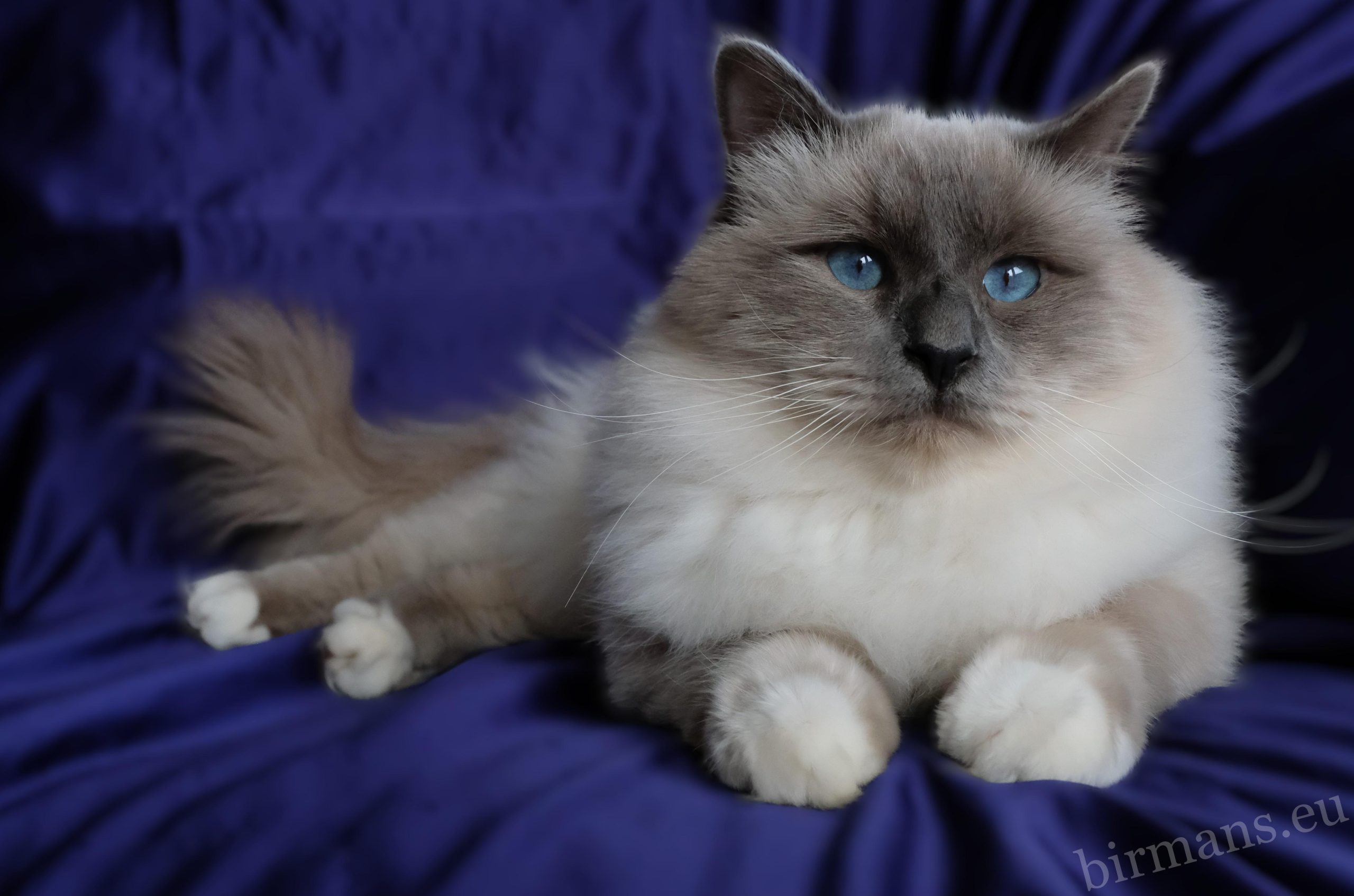
Behind Saba Birman kittens stands a long-term established, documented bloodline.
A bloodline doesn’t just mean the cat “comes from a good family.” In practice, it shows what decisions the breeder has made over multiple generations to preserve health, stable temperament, proper body structure, breed type, and people-oriented nature.
The Saba Birman bloodline includes World Champions, European Champions, International Champions, and Grand Champions. These titles are not important in themselves, but because they reflect more than ten years of consistent breeding work and the results of several hundred international judgments.
It matters whether a cat merely resembles the breed, or comes from a multi-generationally verified, internationally recognized bloodline.
Saba Birman cattery works with a 0% inbreeding strategy to preserve genetic diversity and the health of the breeding stock in the long term.
For the family, this means: they’re not seeing a momentary promise, but documented history and verifiable professional background.
2. Genetic screenings: why are they important even if the kitten looks healthy?
A kitten can be beautiful, playful, and seemingly completely healthy.
However, responsible breeding does not begin with what the buyer sees in the first photo.
At Saba Birman cattery, breeding cats have a documented genetic background. The purpose of genetic screenings is not to make the kitten “prettier,” but to reduce the risk of hereditary diseases in the long term.
The cattery has operated a documented preventive animal health program for more than 13 years, with regular screenings for FIV, FeLV, Giardia infection, feline coronavirus, and parvovirus, among others.
This represents countless documented tests over the years. Health here is not a promise, but a continuously monitored system.
With a cheaper kitten, it’s worth asking:
- Are the parents’ genetic results available?
- Are the tests documented?
- What diseases have been screened for?
- Is there a regular screening program in place, or just occasional promises?
The genetic background is not visible from the outside, yet it is one of the most important values in the long term.
3. Veterinary program: what does prevention mean?
In responsible breeding, veterinary care does not begin at the last minute.
Not when the kitten is already about to move.
In the Saba Birman world, the veterinary program operates at the level of the entire cattery. The goal is not merely for kittens to appear healthy at handover, but for the development of the breeding stock and kittens to be regularly monitored, documented, and responsibly tracked.
A kitten’s price therefore includes:
- the veterinary background of the parents and breeding animals,
- continuous monitoring of the kittens,
- the vaccination program,
- deworming,
- antiparasitic treatment,
- clinical veterinary examination before handover,
- in case of international relocation, the passport and necessary veterinary certificates.
The cattery does not accept outside female cats for breeding, even though this would be a significant revenue opportunity. The purpose is to preserve the health security and biological protection of the breeding stock.
This is not a spectacular part of breeding, but it is crucial for the family’s security.
4. Pedigree and official background: why is it not just paper?
Many people ask:
Why is the pedigree important if I only want a family pet?
The answer is simple: because the pedigree is not important for shows, but for origin.
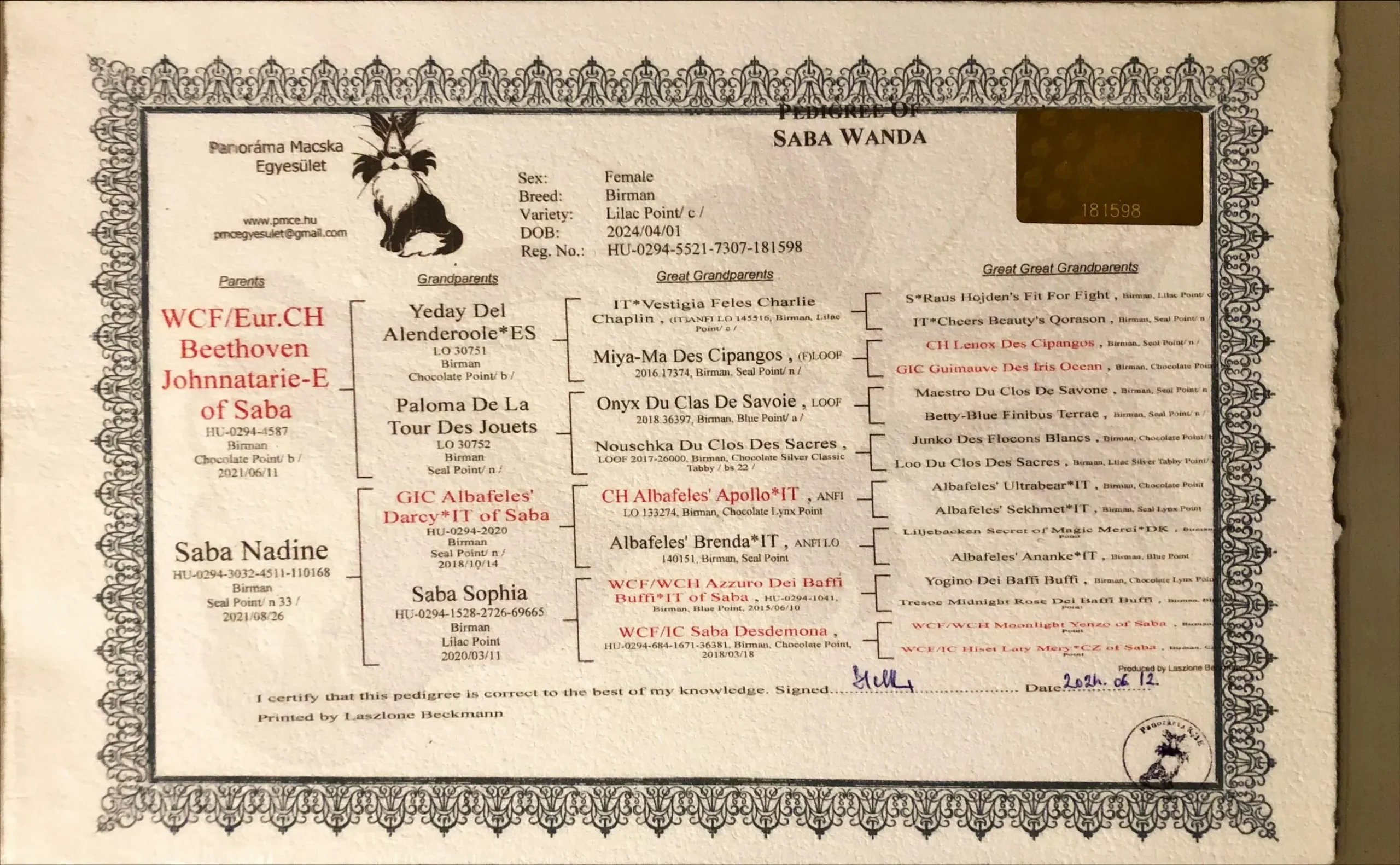
The pedigree shows that the kitten truly comes from the bloodline the breeder presents. Official registration, documented ancestry, and breeding background all serve to ensure the family not only sees a beautiful kitten, but also knows where it comes from.
It matters what kind of pedigree we’re talking about. A strong bloodline verified by international results means more than mere administration: it shows professional history, verifiable ancestors, and consistent breeding work.
When purchasing Saba Birman kittens, the family receives, among other things:
- pedigree,
- vaccination book or pet passport,
- microchip,
- chip registration,
- sales contract,
- health documents,
- necessary veterinary certificates in case of international relocation.
This is not administrative formality.
This is part of trust.
5. Living conditions: where does the kitten actually grow up?
A kitten’s personality does not develop on the day of relocation. The first weeks and months are defining for life.
That’s why it’s an important question what environment they grow up in.
Is there enough space?
Is there cleanliness?
Is there human contact?
Is there a stimulating environment?
Is there an opportunity for the kitten to not only be raised, but to actually receive attention?
In the Saba Birman world, cats do not live in cages, but in nearly 200 m² of indoor living space, where each mother receives a separate apartment with her kittens. In addition, five indoor-outdoor runs provide natural movement and a varied environment.
This is not merely a matter of comfort. Adequate living space, hygiene, and natural stimuli contribute to the development of a balanced nervous system and healthy immune system.
This difference is also felt later in the new family.
6. Socialization and personality: it matters who we bring home
One of the most special characteristics of the Birman cat is its people-oriented nature.
But no two kittens are alike.
Some are braver.
Some are more thoughtful.
Some come right away.
Others observe first, and only then initiate.
A responsible breeder can tell you not only what color the kitten is, but also what personality it has.
For many families, this is more important than appearance, as a kitten will be a companion in everyday life for many years.
That’s why at Saba Birman cattery, the goal in selecting kittens is always for the right personality to go to the right family.
7. Lifelong breeder support
Handing over a kitten is not the end of the relationship, but the beginning of a new chapter.
Saba Birman families can count on help even after relocation.
They can ask about:
- settling in,
- feeding,
- behavior,
- health questions,
- introducing to other animals,
- travel.
In addition, detailed written guides and professional blogs help families with everything from nutrition to living with dogs, other cats, or young children.
This support is not a separate service.
It’s a natural part of responsible breeding.
8. International trust and family testimonials
Saba Birman kittens now live in 26 countries across 4 continents.
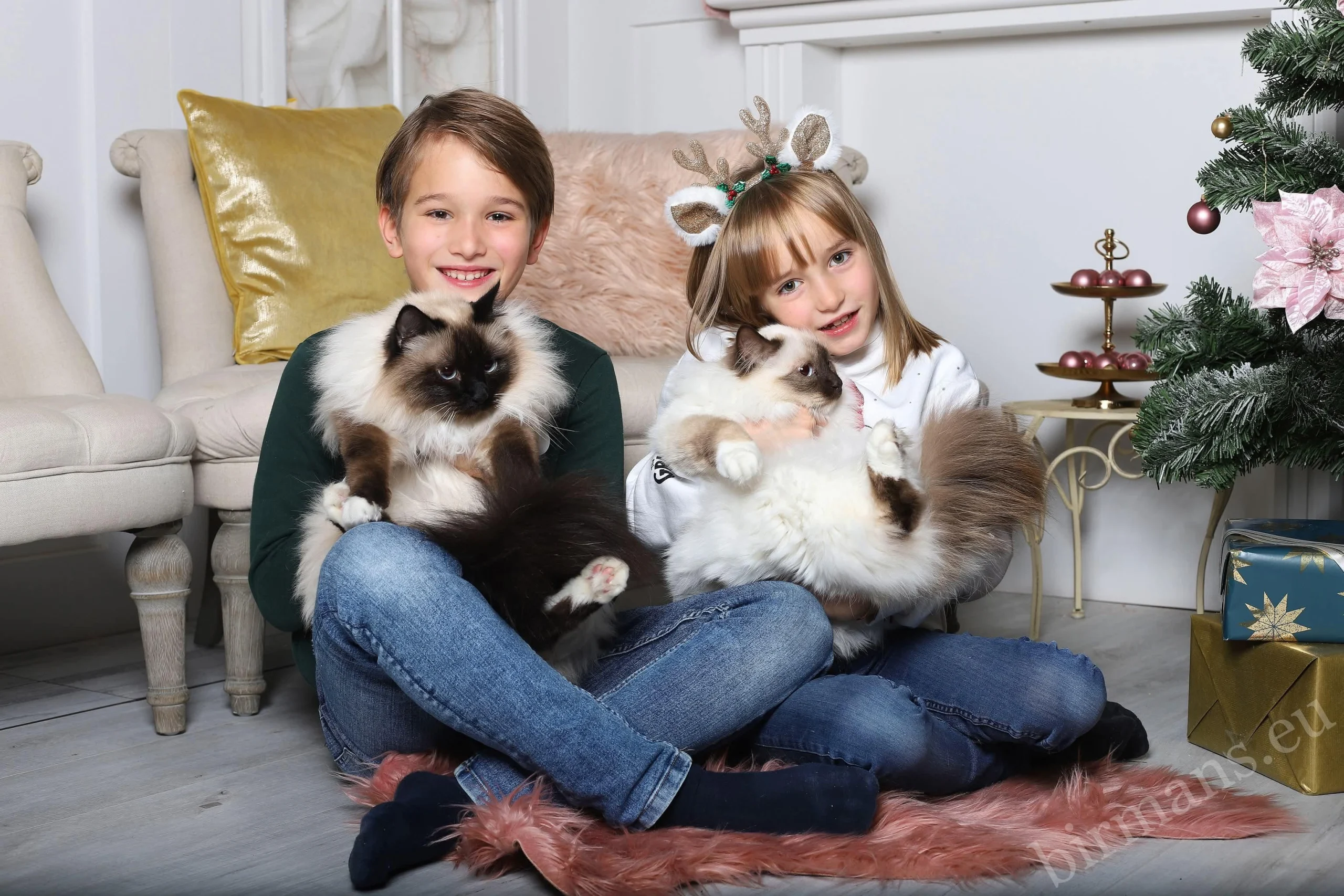
This is not just a statistic.
It shows that many families did not choose the geographically closest cattery, but were willing to bear the additional cost of international shipping to bring home a Saba Birman kitten.
This trust is the result of many years of consistent professional work.
So what is expensive and what is cheap?
A €1,500 or €1,800 Birman kitten may seem cheaper at first glance.
However, the real question is not the initial price.
But rather:
- is the bloodline documented;
- what health screenings are behind it;
- what veterinary program operates in the cattery;
- what conditions does the kitten grow up in;
- what professional background does the breeder work with;
- can the family count on long-term help.
If these are missing, the lower price is often not a real saving, but less visible background.
What does a Saba Birman kitten’s price include?
A Saba Birman kitten’s price does not only include the kitten itself.
It includes:
- consciously built bloodline;
- genetic background based on World Champion and European Champion ancestors;
- 0% inbreeding strategy;
- documented genetic and animal health program;
- official pedigree;
- microchip;
- vaccinations;
- deworming;
- conscious socialization;
- premium living conditions;
- detailed information;
- sales contract;
- international documentation if needed;
- lifelong breeder support.
Behind the purchase price stands more than a decade of consistent professional work.
Available Birman Kittens in 2026
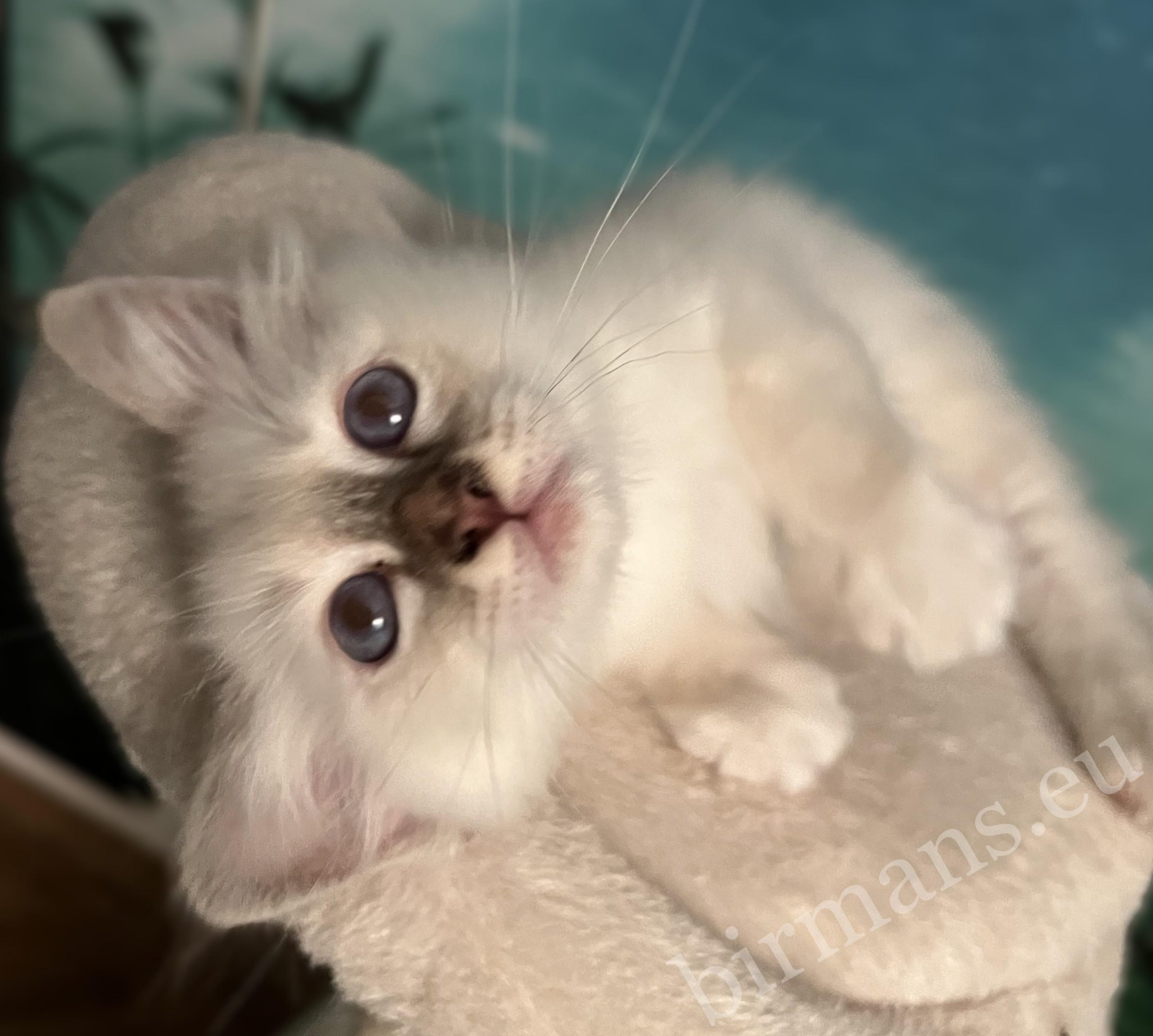
If you are currently looking for a Birman kitten, it’s worth getting to know the currently available Saba Birman kittens.
Every kitten has its own personality.
Some are more playful, others calmer or more cuddly.
The goal is always for the right kitten to go to the most suitable family.
Summary
The Birman cat price in 2026 cannot be understood in isolation.
The price of a kitten from a responsible breeder reflects not only the kitten itself, but the entire professional system behind it: the documented bloodline, the genetic and veterinary background, the living conditions, the socialization, and the breeder support available even after relocation.
When choosing a Birman kitten, it’s therefore worth comparing not only prices, but also what demonstrable professional work stands behind the cattery.
When choosing a lifelong companion, this difference can be defining for many years.