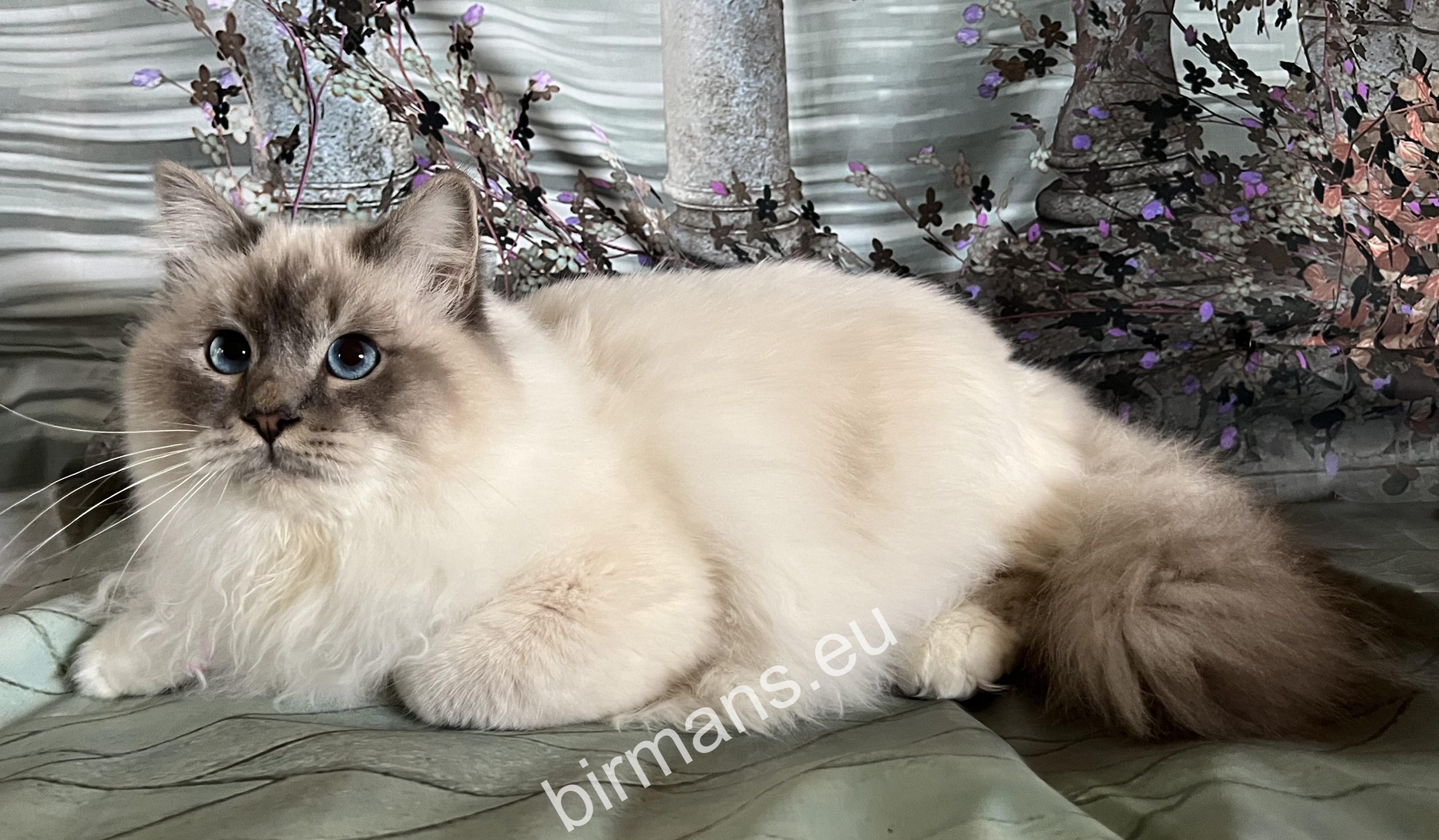
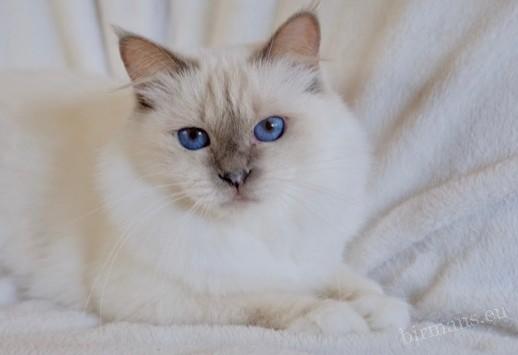
GICH Saba Lana – Seal Tabby Birman Female A refined female of Saba Birman Cattery, representing the elegance of the breed and a stable foundation of international quality.
Genetic Screenings and Documented Tests
The foundation of Saba Birman Cattery’s Birman cat breeding program is documented, verifiable genetic and health screening.
The purpose of the tests is not to make promises, but to record objective data, involving independent, international laboratories.
For the Birman breed, there is currently no widely documented, breed-specific genetic disease known.
Therefore, the WCF and other associations do not require or recommend genetic testing.
Nevertheless, Saba Birman Cattery performs additional screenings to ensure that the genetic background is transparent and stable in the long term.
These screenings cover not only known diseases such as HCM (hypertrophic cardiomyopathy) and PKD (polycystic kidney disease), but also the exclusion of other genetic and hereditary diseases known in cats.
At Saba Birman Cattery, documented genetic tests have shown negative results for all tested genetic diseases in every test performed.
The documented genetic background and regular screenings represent an additional investment, which also affects the price of Birman cats.
When someone is looking for a Birman cat for sale, the difference is not always immediately visible —
but the genetic and health work done in the background determines the value in the long term.
In the Saba Birman system, genetic screening is not an extra – it is a basic requirement.
If it is important to you to choose a Birman kitten with a documented genetic background, you will find the next step here.
What Do Genetic Tests Mean for Saba Birman Cats?
Genetic tests in every case:
– are linked to the specific cat
– have precise dates and identifiers
– are performed by external, independent laboratories
– are verified with original documents
The purpose of the published data is transparency and verifiability, not communicating promises.
The genetic system of Saba Birman Cattery is not built on a single generation.
The female breeding stock originates from our own breeding over multiple generations.
This enables long-term, practical observation of bloodlines and verification of their stability.
This means that the results of genetic screenings should not be interpreted as standalone data, but as part of a system where bloodlines that have functioned healthily over multiple generations can be documented and tracked.
Another fundamental principle of the breeding program is 0% inbreeding (inbreeding-free breeding).
This is ensured by the inclusion of males from external bloodlines.
The multi-generational female lines from our own breeding and the deliberately selected, genetically screened males together form a system aimed at maintaining a long-term stable, healthy breeding stock.
The genetic and health background in the Saba Birman system is not only professionally structured, but also ensured through continuous veterinary control and legally documented, verifiable operation.
Overview of Genetic Tests for Saba Birman Cats
On this page, genetic screenings are presented in chronological order, broken down by cat, so visitors can directly verify the data of individual tests.
The overview list includes:
– the cat’s name
– the date of the test
– the name of the laboratory performing the test
– the type of test
– a brief summary of the result
– access to the original document
The information displayed is always factual and documented, reflecting the content of laboratory reports.
Independent Genetic Laboratories, Saba Birman Cat Screenings
Genetic tests are performed by internationally recognized, independent laboratories, including:
-Orivet Genetic Pet Care
-Wisdom Panel
https://www.wisdompanel.com/en-gb
https://www.wisdompanel.com/en-us
The public professional background and operation of the laboratories are publicly verifiable.
Note:
The purpose of the published data is to support responsible breeding, transparency, and informed decision-making.
If it is important to you to choose from a bloodline that is also consciously built from a health perspective, you will find the next step here.
Genetic Test – Wisdom Panel™ (excerpt)
Cat name (pedigree): Yochi de Matiyazur Fr of Saba
Breed: Birman
Sex: male
Date of birth: April 14, 2024
Microchip ID: 250268780830329
Registration number: W422446-HU-0294-25-SBI-LO
Laboratory: Wisdom Panel™
Test date: March 1, 2025
Sample kit ID: FNDHWKL
Genetic Diversity
Heterozygosity: 25%
This value is within the typical range for the Birman breed (23–27%), indicating a balanced genetic background within the breed.
Health Summary
-At Risk: 0 tested conditions
-Carrier: 1 tested variant
-Negative / Clear: 49 tested genetic variants
Carrier variant:
-Mucopolysaccharidosis Type VI – Modifier
(The modifier variant does not cause disease on its own; the presence of another disease-causing variant is required for clinical symptoms.)
Blood Type
Blood type: A
Genotype: A/b (carrier of blood type B)
Yochi’s blood type is the most common, type A, and in case of transfusion is compatible with type A blood.
Breed-Specific Health Test
Birman Hypotrichosis (FOXN1 gene):
– Result: Clear
The breed-specific genetic variant tested is not detectable.
Other Genetic Screenings – Summary
For the additional genetic tests in the report (including PKD, HCM, PRA, SMA, GM-gangliosidosis, metabolic and neurological diseases), disease-causing variants are not detectable in the tested genes.
Appearance-Related Genetic Traits
-Siamese colorpoint pattern: genetically confirmed
-Long hair: genetically confirmed
-Birman gloves: genetic background confirmed
Genetic Test – Orivet Genetic Summary Report (excerpt)
Cat name (pedigree): Beethoven Johnnatarie-E Bonbón
Call name: Bonbón
Breed: Birman
Sex: male
Microchip ID: 941010000192893
Color: Chocolate Point (SBI b)
Test date: March 8, 2022
Laboratory: Orivet Genetic Pet Care
Genetic test results (according to the report):
- Acute Intermittent Porphyria – NEGATIVE / CLEAR (mutation not detectable)
- Autoimmune Lymphoproliferative Syndrome – NEGATIVE / CLEAR
- Chylomicronemia – Lipoprotein Lipase Deficiency – NEGATIVE / CLEAR
- Congenital Myasthenic Syndrome – NEGATIVE / CLEAR
- Cystinuria (SLC3A1) – NEGATIVE / CLEAR
- Frontonasal Dysplasia (Burmese Head Defect) – NEGATIVE / CLEAR
- GM1 Gangliosidosis – NEGATIVE / CLEAR
- GM2 Gangliosidosis – NEGATIVE / CLEAR
- Haemophilia B – NEGATIVE / CLEAR
- Hereditary Retinal Degeneration (PRA CEP290) – NEGATIVE / CLEAR
- Hyperoxaluria (GRHPR) – NEGATIVE / CLEAR
- Polycystic Kidney Disease (PKD) – NEGATIVE / CLEAR
- Pyruvate Kinase Deficiency – NEGATIVE / CLEAR
- Spinal Muscular Atrophy – NEGATIVE / CLEAR
- Vitamin D Rickets – NEGATIVE / CLEAR
- Hypertrophic Cardiomyopathy – Maine Coon – NEGATIVE / CLEAR
- Hypertrophic Cardiomyopathy – Ragdoll – NEGATIVE / CLEAR
- Hypokalaemia Periodic Polymyopathy – Burmese – NEGATIVE / CLEAR
- Mucopolysaccharidosis Type I – NEGATIVE / CLEAR
- Mucopolysaccharidosis Type VI (D520N) – NEGATIVE / CLEAR
- Myopathy (COLQ) – NEGATIVE / CLEAR
- Myotonia Congenita (Feline) – NEGATIVE / CLEAR
- Niemann-Pick Disease – NEGATIVE / CLEAR
Traits (phenotype):
- Preaxial Polydactyl (Pd) – NEGATIVE (variant not detectable)
In brief: for all tested genetic variants, clear / negative results are recorded, meaning that in Bonbón’s case, the genetic variants tested in the report are not detectable.
Genetic Test – Wisdom Panel™ (excerpt)
Cat name (pedigree): Albafeles Darcy of Saba
Call name: Darcy
Breed: Birman
Sex: Male
Microchip: 981020000178417
Laboratory: Orivet Genetic Pet Care
Report type: Genetic Summary Report
Case Number: 16-097260
Test date: March 30, 2016
Test results (according to the report):
- Pyruvate Kinase (PK) Deficiency – Normal / Clear / Negative
- Polycystic Kidney Disease – Normal / Clear / Negative
- Mucopolysaccharidosis – Normal / Clear / Negative
- Niemann-Pick Disease Type C – Normal / Clear / Negative
- Familial Episodic Hypokalaemic Polymyopathy – Normal / Clear / Negative
- Hypertrophic Cardiomyopathy (Maine Coon) – Normal / Clear / Negative
- Hypertrophic Cardiomyopathy (Ragdoll) – Normal / Clear / Negative
- Progressive Retinal Atrophy (PRA) CEP290 – Normal / Clear / Negative
- Progressive Retinal Atrophy (PRA) CRX – Normal / Clear / Negative
- Spinal Muscular Atrophy (SMA) – Normal / Clear / Negative
- Glycogen Storage Disease Type IV – Normal / Clear / Negative
- Gangliosidosis Type 1 & 2 – Normal / Clear / Negative
HCM / Cardiac Ultrasound Screening (excerpt)
Type of examination:
Hypertrophic Cardiomyopathy (HCM) cardiac ultrasound examination
Examination date: March 30, 2016
Examination location: (according to ultrasound protocol)
Examining veterinarian: (verified according to report)
Result (according to the report):
HCM – Negative
No hypertrophic cardiomyopathy or other abnormal cardiac muscle changes were detectable during the examination.
Behind the documents stands a living, healthy life – and a consciously built foundation.
Genetic Test – Orivet Genetic Summary Report (excerpt)
Cat name (pedigree): Azzurro dei Baffi Buffi
Call name: Azzurro
Microchip number: 985170001155905
Breed: Birman
Sex: male
Laboratory: Orivet Genetic Pet Care
Case Number: 16-090838
Test date: January 18, 2016
Genetic test results (according to the report):
- Pyruvate Kinase (PK) Deficiency – Normal / Clear / Negative (not detectable)
- Mucopolysaccharidosis – Normal / Clear / Negative
- Polycystic Kidney Disease – Normal / Clear / Negative
- Niemann-Pick Disease Type C – Normal / Clear / Negative
- Familial Episodic Hypokalaemic Polymyopathy – Normal / Clear / Negative
- Hypertrophic Cardiomyopathy – Maine Coon – Normal / Clear / Negative
- Hypertrophic Cardiomyopathy – Ragdoll – Normal / Clear / Negative
- Progressive Retinal Atrophy (PRA) CEP290 – Normal / Clear / Negative
- Progressive Retinal Atrophy (PRA) CRX – Indeterminable / Inconclusive
- Spinal Muscular Atrophy (SMA) – Maine Coon – Normal / Clear / Negative
- Glycogen Storage Disease Type IV – Normal / Clear / Negative
- Gangliosidosis Type 1 & 2 – Normal / Clear / Negative
Blood type (trait): Non B/b (may be A/A or A/AB)
Report confirmed by: Dr. Noam Pik BVs MDSV and George Sofronidis BSc (Hons)
Examination date: January 18, 2016
Examination location: Siófok, Hungary
Veterinarian: Dr. Pál Benedek, small animal specialist veterinarian
Type of examination:
– Ultrasound screening: heart (HCM), kidneys (PKD)
– Blood test: FIV / FeLV
Diseases examined:
– Hypertrophic cardiomyopathy (HCM)
– Polycystic kidney disease (PKD)
– Feline Immunodeficiency Virus (FIV)
– Feline Leukemia Virus (FeLV)
Result:
– Negative / not detectable
Brief professional summary:
The veterinary examinations aimed to ultrasonically check the heart and kidneys and rule out the most significant infectious diseases.
The documented examinations showed no pathological abnormalities at the time of the examination.
Genetic Test – Orivet Genetic Analysis Report (excerpt)
Cat’s Name (pedigree): Nofretete von Blütengarten
Call Name: Naomi
Breed: Birman
Sex: female
Microchip Number: 900096000057765
Laboratory: Orivet Genetic Pet Care
Report Type: Genetic Analysis Report
Case Number: 14-099820
Test Date: 12/03/14
Sample Collection: Approved Collection Method: Yes
Results (according to report):
- Pyruvate Kinase (PK) Deficiency – Normal / Clear (no mutation detected)
- Mucopolysaccharidosis – Normal / Clear (no mutation detected)
- Polycystic Kidney Disease – Normal / Clear (no mutation detected)
- Niemann-Pick Disease Type C – Normal / Clear (no mutation detected)
- Familial Episodic Hypokalaemic Polymyopathy – Normal / Clear (no mutation detected)
- Hypertrophic Cardiomyopathy – Maine Coon – Normal / Clear (no mutation detected)
- Hypertrophic Cardiomyopathy – Ragdoll – Normal / Clear (no mutation detected)
- Progressive Retinal Atrophy (PRA) CEP 290 – Normal / Clear (no mutation detected)
- Progressive Retinal Atrophy (PRA) CRX – Normal / Clear (no mutation detected)
- Spinal Muscular Atrophy (SMA) – Normal / Clear (no mutation detected)
- Glycogen Storage Disease Type IV – Normal / Clear (no mutation detected)
- Gangliosidosis GM2 – Normal / Clear (no mutation detected)
Genetic Test – Orivet Genetic Pet Care (excerpt)
Cat’s Name (pedigree): Moonlight Yenzo Yoda
Call Name: Yoda
Breed: Birman
Sex: male
Registration Number: 102316 02
Microchip: 900118000083237
Laboratory: Orivet Genetic Pet Care
Report Type: Genetic Analysis Report
Case / Lab ID (Case Number): 14-098775
Date of Test: 12/03/14
Sample Collection Identification: Approved collection method – Yes
Results (according to report):
- Pyruvate Kinase (PK) Deficiency – Normal / Clear (no mutation detected)
- Polycystic Kidney Disease (PKD) – Normal / Clear (no mutation detected)
- Niemann-Pick Disease Type C – Normal / Clear (no mutation detected)
- Familial Episodic Hypokalaemic Polymyopathy – Normal / Clear (no mutation detected)
- Hypertrophic Cardiomyopathy (Maine Coon) – Normal / Clear (no mutation detected)
- Hypertrophic Cardiomyopathy (Ragdoll) – Normal / Clear (no mutation detected)
- Progressive Retinal Atrophy (PRA) CEP290 (PRA-rdAc) – Normal / Clear (no mutation detected)
- Progressive Retinal Atrophy (PRA) CRX (PRA-rdY) – Normal / Clear (no mutation detected)
- Spinal Muscular Atrophy (SMA) – Maine Coon – Normal / Clear (no mutation detected)
- Glycogen Storage Disease Type IV – Normal / Clear (no mutation detected)
- Gangliosidosis GM2 – Normal / Clear (no mutation detected)
- Mucopolysaccharadosis – Indeterminable (inconclusive result)
Date of Examination: 30/01/2015
Place of Examination: Siófok, Hungary
Veterinarian: Dr. Pál Benedek, small animal specialist veterinarian
Type of Examination:
– Cardiac Ultrasound (HCM)
– Renal Ultrasound (PKD)
Result:
Negative / Normal – no pathological abnormality was found based on the documented examination.
Brief professional summary:
The purpose of the ultrasound examination was to rule out hypertrophic cardiomyopathy (HCM) and polycystic kidney disease (PKD).
At the time of the examination, the ultrasound images of the heart and kidneys showed no pathological changes.
Quality is not a promise, but a consistently built system.
PKD (Genetic) and HCM (Cardiological) Screenings
The parental background of the Hiset Laty Mary line is supported by documented genetic and cardiological examinations across multiple generations.
The purpose of the screenings is to reduce the risk of genetic and heart diseases and to inform breeding decisions.
Genetic Screening – PKD1
Nimoe von Imporio (Birman, female)
– PKD1 genetic test (Genomia s.r.o., ISO 17025 accredited laboratory)
– Result: N/N – no mutation of the PKD1 gene detected
– Report date: 2009
Taranis delle Ninfe del Lago (Birman, male)
– PKD1 genetic test (University of California, Davis – Veterinary Genetics Laboratory)
– Result: N/N – no disease-causing mutation of the PKD1 gene detected
– Confirmed by identity marker test
– Report date: 2013
Cardiological Screening – HCM
Nimoe von Imporio (Birman)
– HCM / RCM cardiological screening (PawPeds health program)
– Result: HCM – Negative
– Date of examination: 30/01/2010
Marco Polo Sunny Queen (Birman, female)
– HCM cardiological screening – cardiac ultrasound
– Result: HCM – Negative
– Date of examination: 09/01/2015
– Re-examination recommended: 1–2 years
Summary
The parental health background of the Hiset Laty Mary line is documented by examinations performed by independent, internationally recognized laboratories and veterinarians.
Genetic and cardiological screenings together serve responsible breeding, transparency, and long-term health safety.
Parental Cardiological Screening – HCM (excerpt)
Hiset Laty Mary Line
Cat’s Name (pedigree): Marco Polo Sunny Queen
Breed: Birman
Sex: female
Date of Birth: 28/04/2013
Microchip ID: 9810981004440216
Body weight at examination: 3.8 kg
Type of Examination:
Hypertrophic Cardiomyopathy (HCM) cardiological screening – cardiac ultrasound
Date of Examination: 09/01/2015
Place of Examination: Libeř, Czech Republic
Examining Veterinarian:
MVDr. Luboš Hřib, Veterinarian
Examination Equipment:
Mindray M5 Vet echocardiograph
Auscultation: Normal
Heart Rate: 180 bpm
Cardiac Ultrasound Evaluation (based on phenotype):
HCM – Negative
During the examination:
- no left atrial enlargement was detectable,
- no left ventricular wall thickening was present,
- no systolic anterior motion (SAM) was observed.
Re-examination recommended: 1–2 years
Parental Cardiological Screening – HCM / RCM (excerpt)
Hiset Laty Mary Line
Cat’s Name (pedigree): Nimoe von Imporio A
Breed: Birman
Date of Birth: 17/02/2008
Microchip ID: 040096100116113
Type of Examination:
HCM / RCM cardiological screening (cardiac ultrasound)
within the PawPeds health program
Date of Examination: 30/01/2010
Place of Examination: Veterinární klinika Jesenice, Czech Republic
Examining Veterinarian:
MVDr. Luboš Hřib (reg. no.: 4901), Veterinarian
Examination Method:
Echocardiography (M-mode and 2-D examination, right parasternal views)
Evaluation (based on phenotype):
HCM: Negative
RCM: not confirmed
During the examination, no pathological left ventricular thickening, left atrial dilation, or HCM-specific abnormalities were detectable.
Parental Genetic Tests (excerpt)
Nimoe von Imporio (female, Birman)
– PKD1 genetic test (Genomia s.r.o., ISO 17025 accredited laboratory)
– Result: N/N – no mutation of the PKD1 gene detected
– Report date: 2009
Taranis delle Ninfe del Lago (male, Birman)
– PKD1 genetic test (University of California, Davis – Veterinary Genetics Laboratory)
– Result: N/N – no disease-causing mutation of the PKD1 gene detected
– Confirmed by identity marker test
– Report date: 2013
What does this mean in practice?
The purpose of documented parental genetic testing is to reduce genetic risks and to inform breeding decisions.
The test results are based on concrete, verifiable data and originate from multiple independent laboratories.
Genetic Test – PKD1 (excerpt)
Cat’s Name (Pedigree): Taranis delle Ninfe del Lago
Breed: Birman
Sex: male
Date of Birth: 04.10.2012
Microchip: 380260000722106
Sire: FIN* Zhamanen FC Sandstorm
Dam: SC Miss Mora Tintarella di Luna
Laboratory: University of California, Davis – Veterinary Genetics Laboratory
Institution: School of Veterinary Medicine, UC Davis (USA)
Case ID: CAT50368
Report ID: 6989-2830-2377-8068
Sample Received: 05.11.2012
Report Date: 21.05.2013
Genetic Anomaly Tested:
PKD1 gene – stop mutation
(feline polycystic kidney disease, PKD)
Result (according to report):
N/N – Normal
The disease-causing mutation of the PKD1 gene is not detectable.
Identity marker test:
The report also includes several genetic identity markers (FCA075, FCA105, FCA220, FCA223, FCA229, FCA678) which serve to uniquely identify the sample.
Report Authentication:
The test result can be verified online on the laboratory’s official platform:
https://www.vgl.ucdavis.edu/myvgl/verify.html
Genetic Test – PKD1 (excerpt)
Cat’s Name (Pedigree): Nimoe von Imporio
Breed: Birman
Sex: female
Year of Birth: 2008
Sample ID: 09-15908
Sample Type: buccal swab
Sample Received: 15.06.2009
Laboratory: Genomia s.r.o.
Laboratory Address: Teslova 3, 30100 Plzeň, Czech Republic
Accreditation: ISO 17025 (accreditation number: 1549)
Method: PCR-RFLP (SOP01, accredited method)
Genetic Anomaly Tested:
PKD1 gene, exon 29 – 3284C>A mutation
(polycystic kidney disease – PKD)
Result (according to report):
Mutation not detected (N/N)
The tested mutation of the PKD1 gene is not detectable.
Report Date: 18.06.2009
Responsible Person: Mgr. Martina Šafrová, Laboratory Manager
Frequently Asked Questions
1. What genetic diseases affect the Birman breed (e.g., HCM, PKD)? What genetic screenings does Saba Birman Cattery perform?
The Birman breed is not affected by known, breed-specific genetic diseases.
Therefore, HCM and PKD screenings are not mandatory or recommended for the Birman breed according to international cat organizations.
Despite this, Saba Birman Cattery implements a systematic genetic screening practice that significantly exceeds the mandatory level.
All our breeding cats undergo comprehensive genetic panel testing, which screens for all known feline genetic diseases, regardless of breed-specific relevance.
All genetic results are negative and publicly available on our website under each cat's profile, for example, in the following documents:
Genetic Documentation:
2. What screenings are performed at Saba Birman Cattery?
- fecal panel
- parasite screening
- blood tests
- genetic risk profile
- regular veterinary checks
- documented health history of parents
3. Why is it beneficial for you to choose a Birman cat from a genetically screened lineage?
Because this decision reduces the risk of hereditary diseases and ensures a more stable health background for your cat in the long term.
At Saba Birman Cattery, breeding animals undergo documented genetic screenings (e.g., HCM, PKD, and other relevant tests), ensuring that the lineage is not only beautiful and internationally recognized but also consciously built with health in mind.
A genetically screened Birman kitten offers not just aesthetic pleasure, but a more predictable, safer future.
This may not be visible at first glance — but it can be felt for a lifetime.
The genetic and health background is not a promise – but a documented reality.
See how this translates into a Saba kitten in practice.