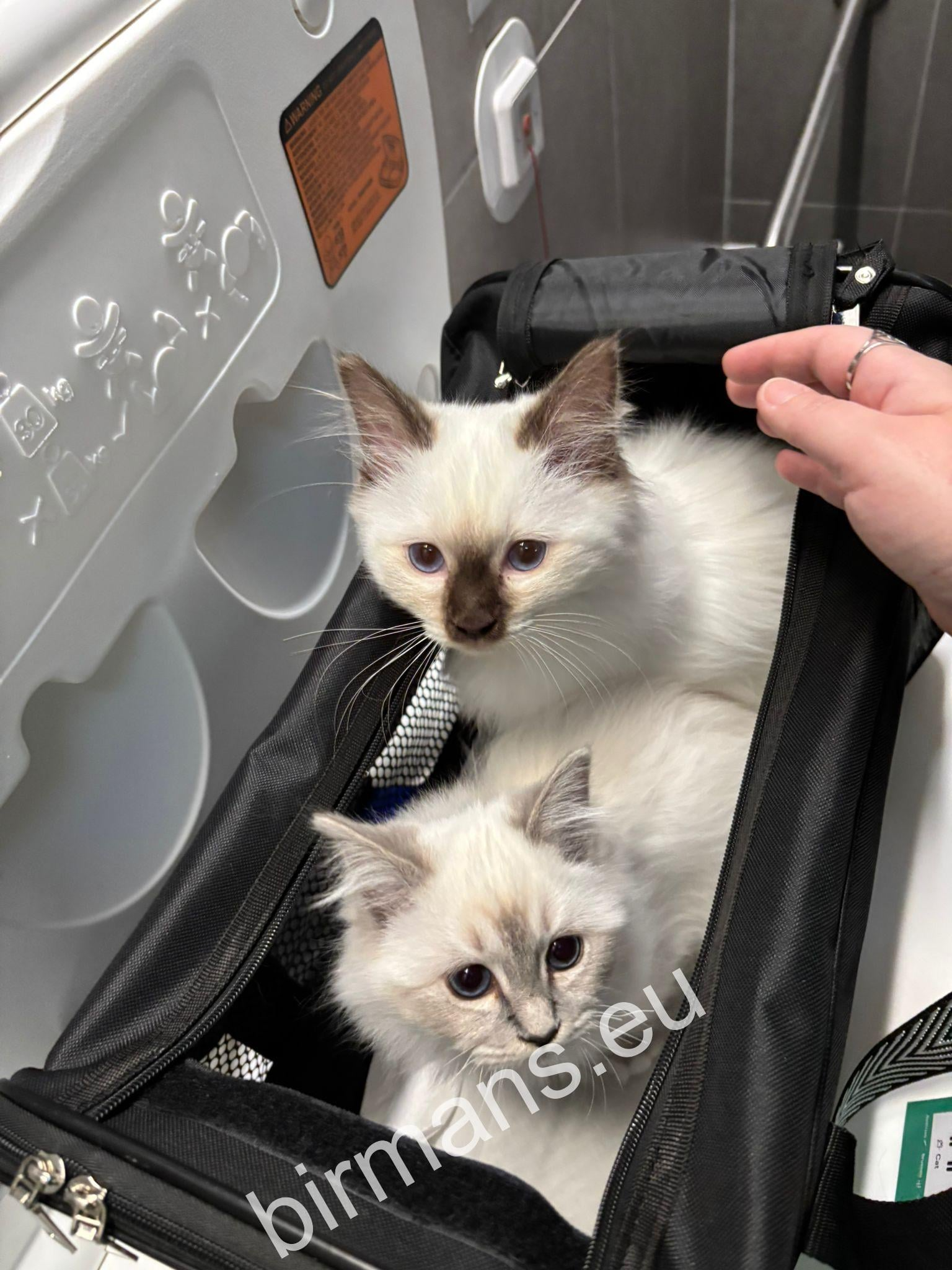
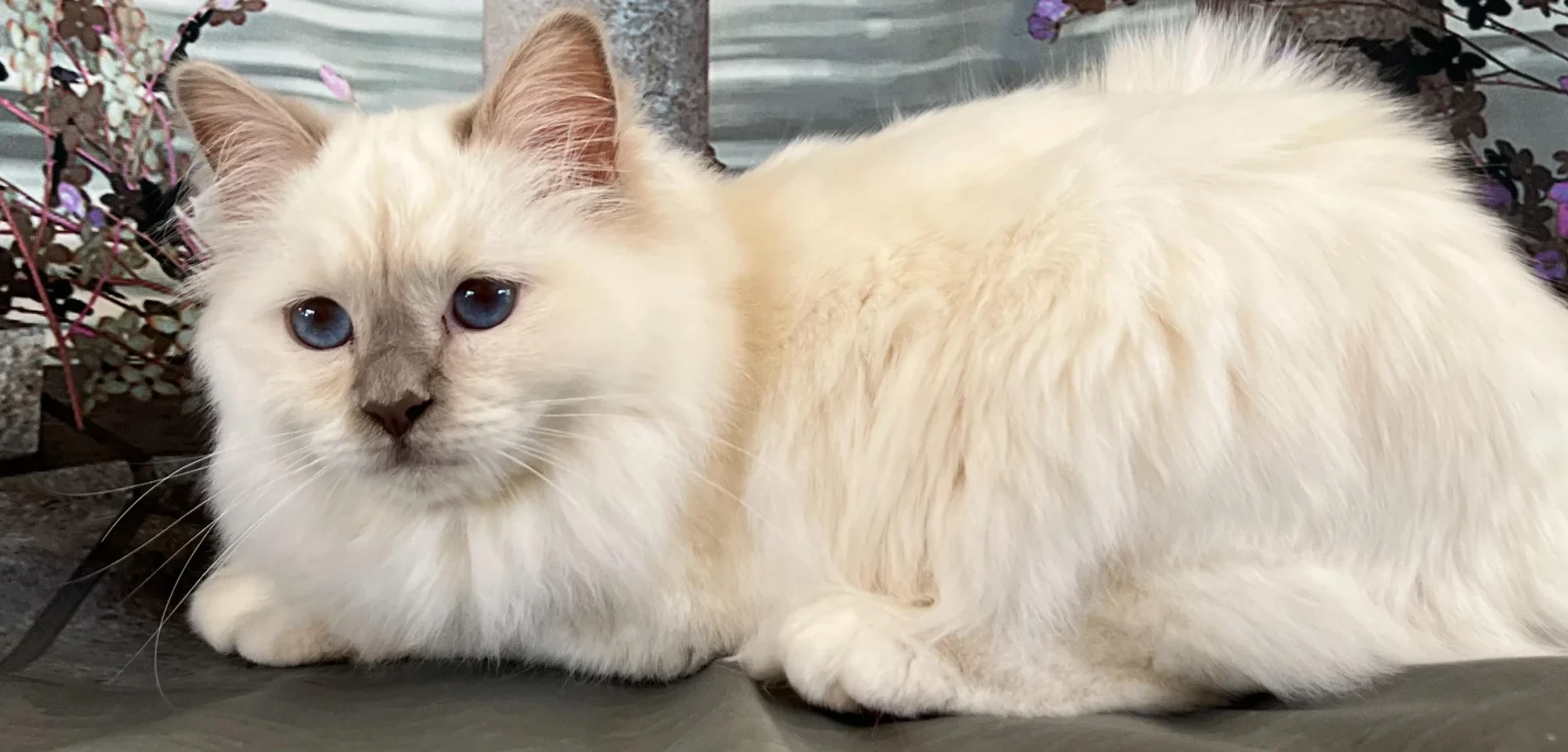
Bringing a Birman kitten home is a special moment. The new family has often been waiting for this meeting for months, yet for the kitten, this day brings an enormous change.
The good news is that the journey is usually much simpler than new owners imagine in advance.
Saba Birman Cattery has been raising Sacred Birman, also known as Burmese sacred temple cat, kittens since 2012. Today, our cats live in loving families across 26 countries on four continents. Behind our documented international presence stand real kitten placements and more than a decade of hands-on experience.
By following a few simple pieces of advice, the journey home can become a safe and calm part of the beginning of your new life together.
The first meeting – why might a kitten be afraid of its new owner?
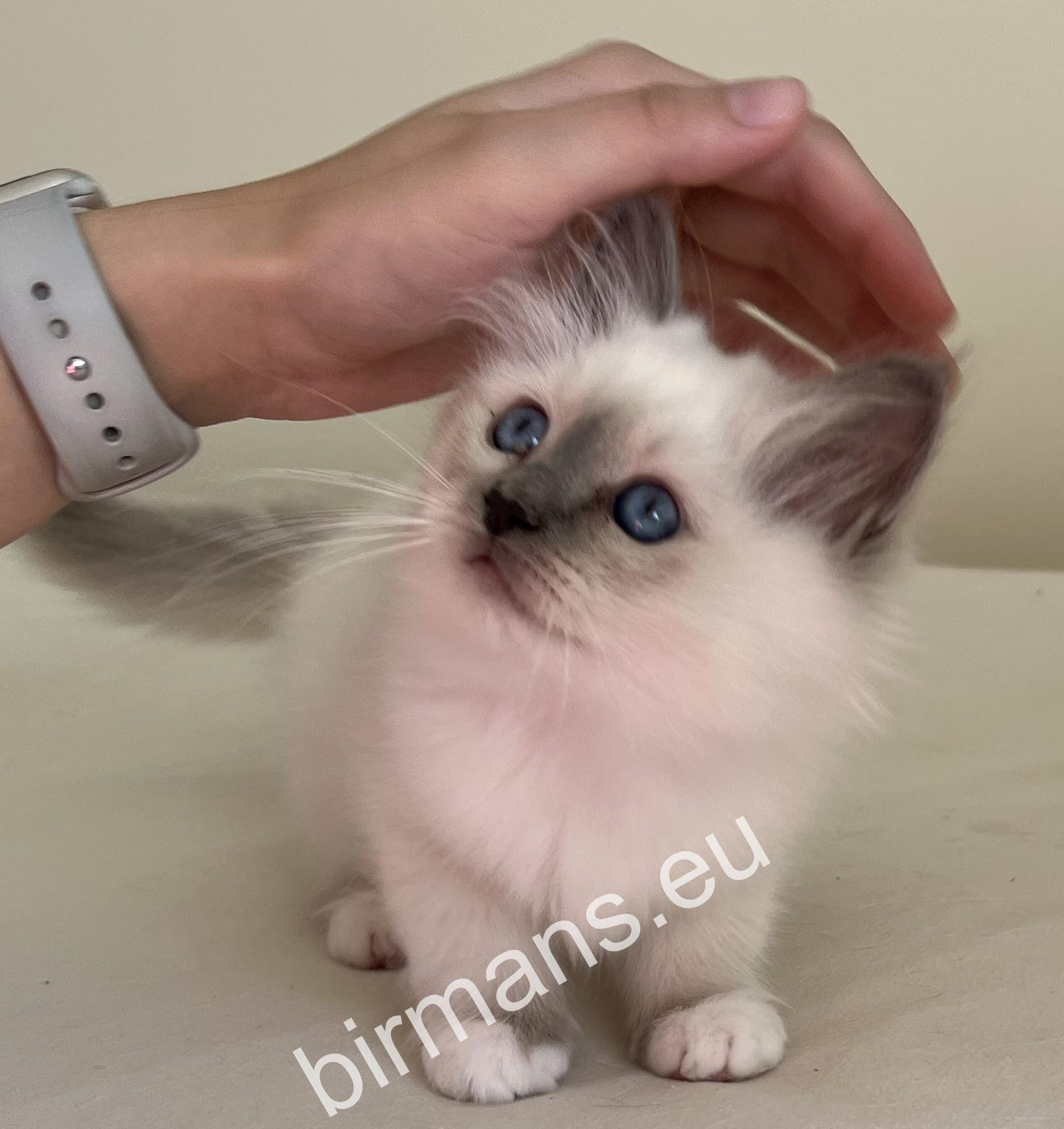
The new owner already knows their kitten from photos, videos, and conversations with the breeder.
For the kitten, however, the new owner is a complete stranger.
This is especially important to understand.
Kittens are suddenly taken from their familiar surroundings into an unknown situation. They meet unfamiliar people, encounter new sounds and smells, all while losing the security of their familiar environment.
At such times, they may not simply be shy, but can experience intense stress, even panic-like fear.
A kitten that was previously playful, friendly, and purring may suddenly freeze, curl up, or try to hide.
This can be a completely natural reaction.
Let’s not expect the kitten to happily jump into our arms at the first meeting!
Saba Birman kittens receive careful, age-appropriate socialization, but for health protection reasons, our cattery cannot be visited. For this reason, the kittens do not meet their future owners beforehand.
The fear shown at the first meeting reveals nothing about what a loving and affectionate companion they will become.
Let’s give them time. Trust in the new home develops gradually.
After the journey home, another important step follows: the kitten gets to know its new home. My earlier guide offers detailed help with this: Birman kitten arrives.
Which cat carrier should you choose?

For travel by car or train, I recommend a sturdy, securely closable, well-ventilated cat carrier.
It’s worth choosing a size that allows the cat to comfortably turn around and lie down, and that can also be used later in adulthood.
Place a simple, highly absorbent pet pad on the bottom of the carrier.
Before departure, I prepare the Saba Birman kittens’ carrier with FELIWAY Classic cat pheromone spray. It contains a synthetic copy of the cat’s natural facial pheromone and can help reduce stress.
Use the product in moderation, following the instructions, always before placing the kitten inside.
A small toy, such as a little mouse or ball from the breeder, can also accompany the kitten.
It’s often suggested online that it’s worth asking the breeder for an old blanket that carries the scent of the familiar home.
This can be helpful in some cases, but it isn’t a practical solution in every cattery.
By 12–15 weeks of age, Saba Birman kittens have long been using cat furniture, scratching posts, and various resting spots. They don’t have their own blankets that they regularly and exclusively sleep on.
That’s why I consider a suitable carrier and calm travel conditions far more important.
Traveling by car with a kitten
Traveling home by car usually goes smoothly, without any particular difficulty.
The most important rule is that the kitten stays in its securely fastened carrier the whole time.
Don’t take the kitten out onto your lap while driving, even if it meows or seems restless at first.
Create a pleasant, quiet environment in the car.
Pay special attention to two things:
- Don’t let direct, strong sunlight fall on the carrier.
- Don’t let the cold air from the air conditioning blow directly onto the kitten.
Position the carrier so that the cat can travel in a pleasantly warm, draft-free environment.
If you’d like, you can speak to the kitten in a calm voice, but there’s no need to constantly entertain or reassure it.
Most kittens prefer to settle down quietly in their carrier.
Should you feed and water the kitten during the journey?
In my experience, kittens usually show no interest in either food or water during the journey.
Under intense stress, many cats simply don’t want to eat or drink.
For shorter car trips, feeding is therefore usually not necessary.
On longer journeys, even those lasting several days, of course make sure the cat has the opportunity to eat and drink.
It often happens that the cat only starts showing interest in food once you’ve arrived at a calm place to stay.
After arriving at the new home, temporary loss of appetite may also occur, or the cat may only eat and drink when no one is watching.
This shouldn’t immediately be seen as a problem, but with a young kitten, prolonged lack of food or water should never be ignored.
Traveling by train and overnight sleeper
Traveling by train can also be a good solution.
An overnight sleeper compartment booked entirely for your own use can be especially comfortable.
If the railway company’s rules allow it, you can let the kitten out of its carrier in a securely closable compartment used exclusively by you.
In that case, prepare a small litter tray, cat litter, and a food and water bowl.
Leave the carrier open, so the cat can retreat to its familiar little space at any time.
Of course, make sure the compartment door and window are closed, and that the cat can’t hide anywhere dangerous or inaccessible.
In shared carriages, and during boarding and disembarking, the cat should stay in its closed carrier.
My most important advice for new owners
Don’t be afraid of the journey home.
Based on more than 13 years of breeding and international experience, I’ve seen that in the vast majority of cases, kittens’ relocation goes completely smoothly.
No special knowledge or complicated equipment is needed.
A suitable carrier, a few basic preparations, and a patient, calm owner are enough for a successful journey home.
A kitten’s initial fear is natural. Don’t expect immediate ease, playfulness, and purring!
The most important thing is that the kitten arrives home safely, where it can gradually get to know its new family.
The journey home isn’t a test that the kitten or the owner has to pass. It’s simply their first journey together.
Would you like a Saba Birman kitten too?
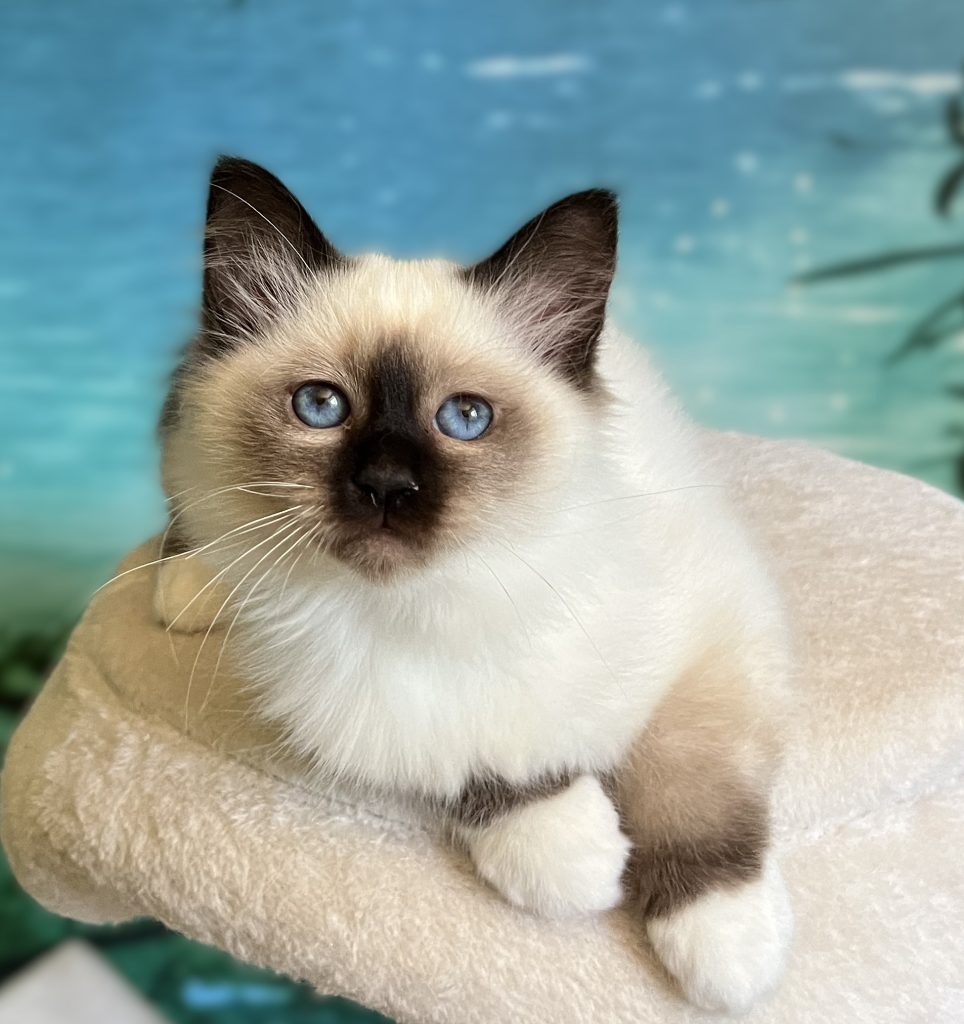
If you’d like to get to know our upcoming litter and the kittens waiting for their new families, take a look at our available Birman kittens.
Our cattery works with a one-year reservation system, which gives priority in kitten selection based on the order of applications.
You can read the details on our Birman kitten purchase and reservation page.
About the Author
Katalin Bodó is the founder and owner-breeder of Saba Birman Cattery. She is a biology-chemistry teacher and economist. She has been breeding, raising, socializing, and placing Sacred Birman cats with international families since 2012.