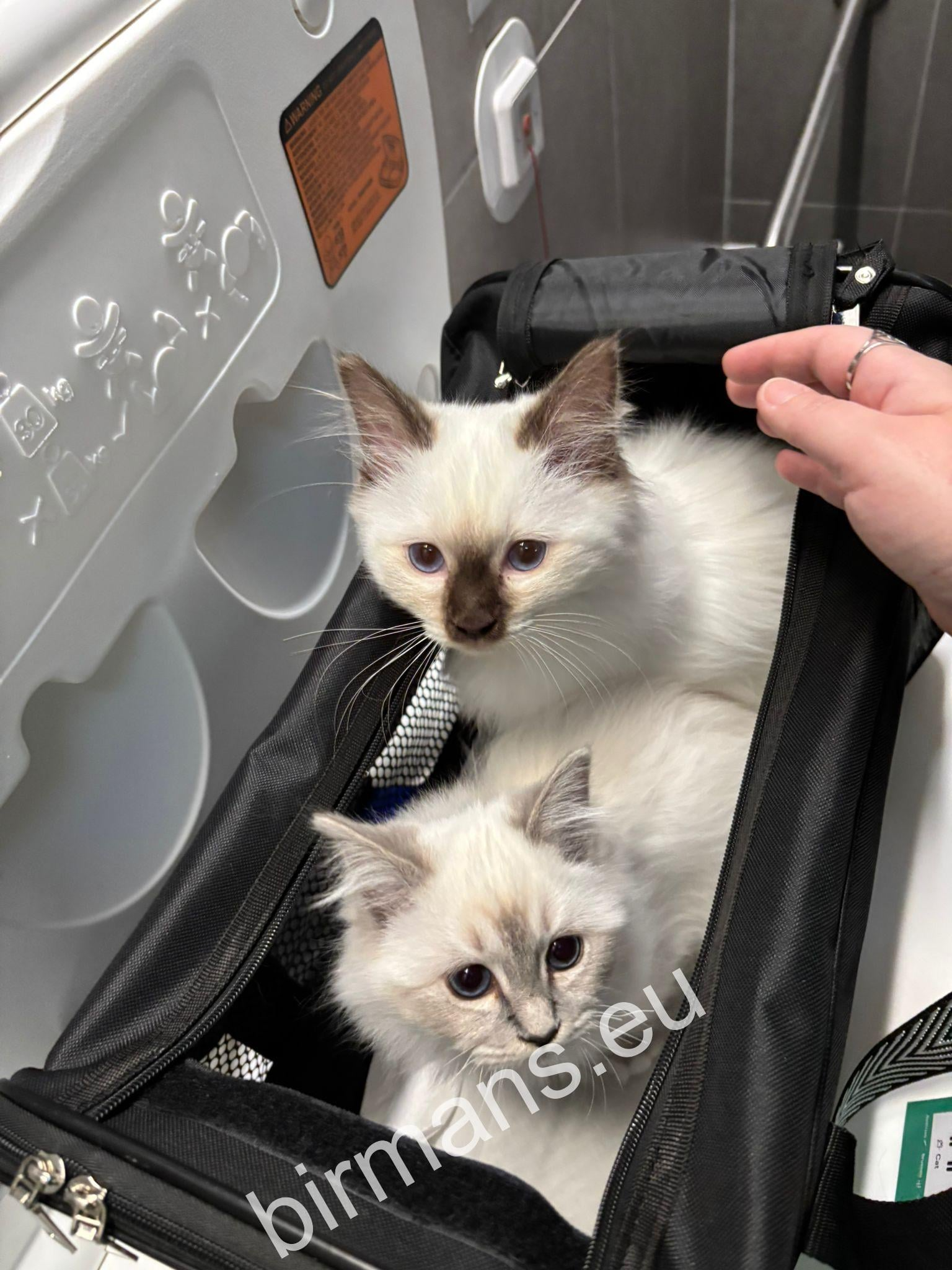
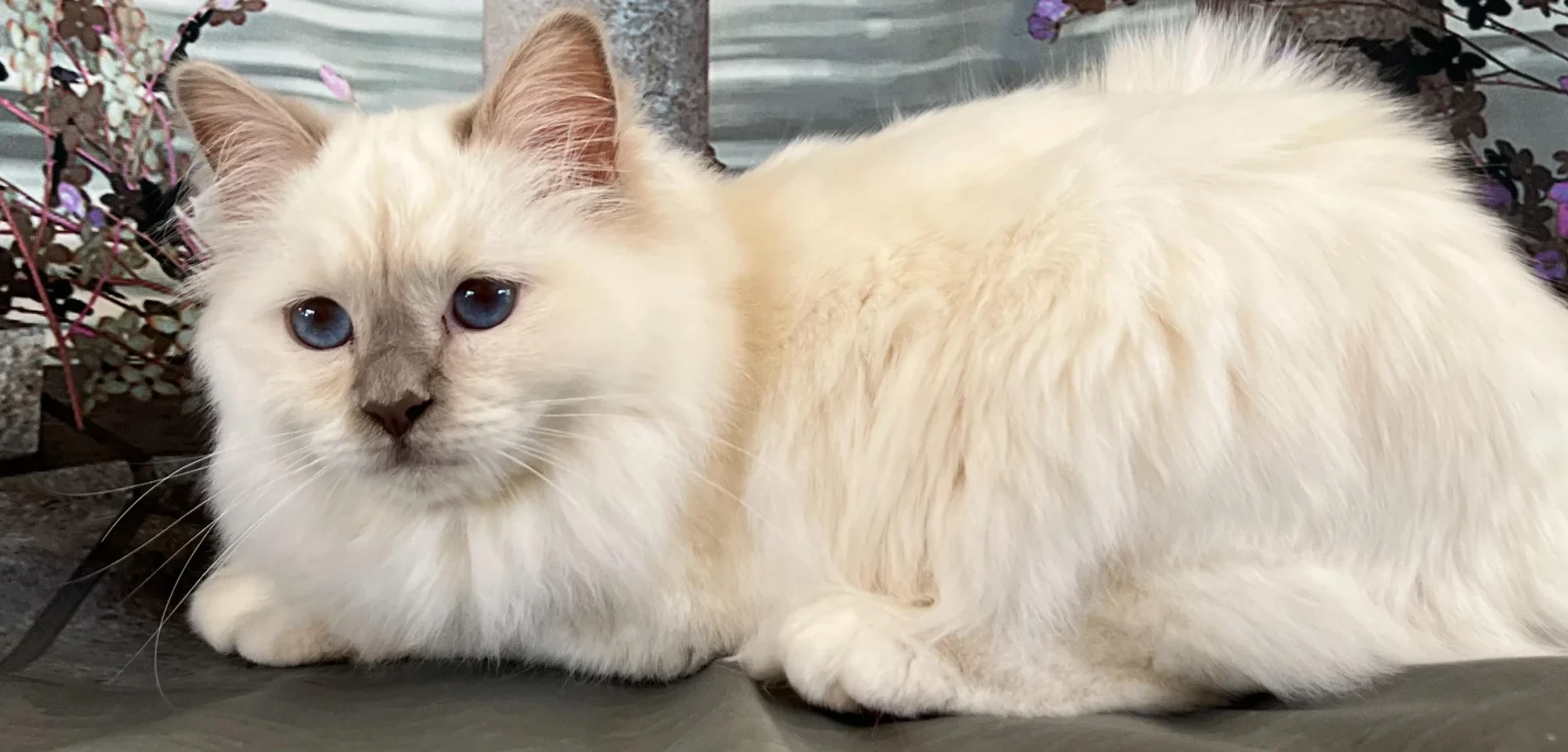
Many people are afraid to fly with a kitten.
How will it behave? Will it meow the whole time? What happens at the security check? How can feeding and watering be managed?
Kittens from Saba Birman Cattery have gone to 26 countries across four continents. I have personally flown with cats many times myself, so I am well acquainted with the situations worth preparing for in advance. Behind our international presence and experience with kitten handovers lie real journeys and more than a decade of breeding work.
Flying with a kitten is usually much simpler than it first appears.
With the right carrier and a few simple preparations, a kitten traveling in the cabin generally neither causes nor experiences any discomfort.
What to expect at the first meeting?
For the kitten, travel day brings a big change.
It leaves its familiar home and sets off with someone who is a complete stranger to it.
The new owner has long awaited this moment, but the kitten does not yet know them.
That is why a kitten who was previously cheerful, playful, and friendly may become very frightened at the handover, even showing signs of panic.
It curls up, hides, and tries to draw as little attention to itself as possible.
This does not mean it dislikes its new owner, or that it is poorly socialized!
It simply needs time to understand that it is safe.
At the first meeting, we shouldn’t expect immediate purring or relaxed behavior.
A loving bond will form in the new home.
What needs to be arranged in advance for the flight?
If you’re bringing your new family member home by car or train instead of by plane, you can read about the necessary preparations in my separate guide: How to bring your Birman kitten home? Traveling by car and train .
First, choose an airline that allows cats to travel in the cabin.
Pet travel must be announced and booked in advance, since only a limited number of animals may travel on board at a time.
The airline also specifies the required carrier size and the maximum allowed weight.
These should be checked before purchasing the ticket.
Another important part of international travel is the veterinary documentation.
In the case of Saba Birman Cattery, however, the new owner has no particular tasks in this regard.
Our cattery handles the veterinary preparation and documentation required for travel to the European Union, the United States, and Canada, in accordance with each country’s requirements.
Our kittens are ready for their new families with all the necessary vaccinations, health preparations, and travel documents.
This means the new owner can focus mainly on organizing the trip itself.
What should you bring on the flight?

Besides the right cat carrier, there are just a few small things worth preparing:
- A small, lightweight plastic water bowl.
- The kitten’s usual dry food.
- A few spare pet pads.
- A secure cat harness and leash.
- The necessary travel documents.
I always provide enough of their usual dry food for Saba Birman kittens.
There is a simple, practical reason for this.
Flights are usually problem-free, but an unexpected delay, cancellation, or connection issue can occasionally turn a short trip planned into a full day, or even a multi-day journey.
In such cases, it’s very reassuring to have the cat’s own food on hand.
During travel, we shouldn’t start feeding unfamiliar wet food bought at the airport.
If feeding becomes necessary, offer the kitten the same dry food it’s used to from the breeder.
In my experience, most kittens show no interest at all in food or water during the journey.
This can be a natural result of the strong stress they’re experiencing.
On longer journeys, however, we should regularly offer the chance to drink, and feed if necessary. Prolonged lack of fluids or food cannot be considered safe for young kittens.
The small plastic bowl is especially useful, since a suitable container may not always be available for purchase at the airport.
The kitten’s own food and water bowl are therefore primarily a safety backup.
We may not need to take them out at all during the whole trip, but if we do need them, everything will be at hand.
Airport security screening
One of the most important practical parts of the flight is the security screening.
Staff usually ask that the cat be taken out of its carrier so the carrier itself can be screened separately.
Never place the kitten into the X-ray machine used for luggage!
The cat must be carried through the appropriate security checkpoint by hand, following the staff’s instructions.
It’s especially important here that the kitten cannot escape.
That’s why I recommend having a properly fitted cat harness and leash with you.
Some carriers also come with an internal safety attachment point.
These can be especially useful in case a zipper happens to open by accident.
When using the harness and leash, always make sure nothing can get caught, and follow the staff’s instructions during the security check. Hold the kitten in your arms, gently close to your body, and walk through the detector. Then place it back in the carrier. The harness and leash are certainly not meant for letting the cat walk around the airport!
If holding the kitten securely proves very difficult, you can request screening in a separate room, if the airport in question offers this option.
Airport screening is often extremely noisy.
The clatter of metal trays, people talking, and constant movement can frighten the kitten.
Feel free to ask the staff to be a little quieter if possible, since you’re traveling with a young animal.
With a little care, these few minutes are easy to get through.
How does the kitten behave on the plane?
In my experience, most kittens travel surprisingly quietly.
Faced with strong, unfamiliar stimuli, many simply curl up in their carrier and spend almost the entire trip in silence.
This doesn’t necessarily mean they feel relaxed.
Rather, in this unfamiliar situation, they want to draw as little attention to themselves as possible.
Meowing can, of course, happen too.
In my experience, prolonged, loud protest is rare among Saba Birman kittens, but if it happens, it isn’t a problem in itself.
In the cabin, the cat must remain in its closed carrier, in accordance with the airline’s regulations.
Don’t take it out during the flight.
You can speak to it in a calm voice, and depending on the carrier’s design and the airline’s rules, you may be able to stay in contact with it without letting it out.
There’s no need for constant checking or special intervention.
In most cases, simply let it travel in peace.
What happens if the flight takes longer than expected?
Because of unpredictable flight delays, it’s worth preparing for a longer journey than expected.
That’s exactly why I pack the kittens’ own dry food, and why I recommend the small plastic water bowl.
If the journey takes several days and includes an overnight stay, that calmer setting gives you the chance to let the cat eat and drink.
There’s no need to panic in such situations either.
The key is to have all the basic essentials with you, so you don’t have to look for solutions at an unfamiliar airport.
Don’t be afraid to fly with a cat.
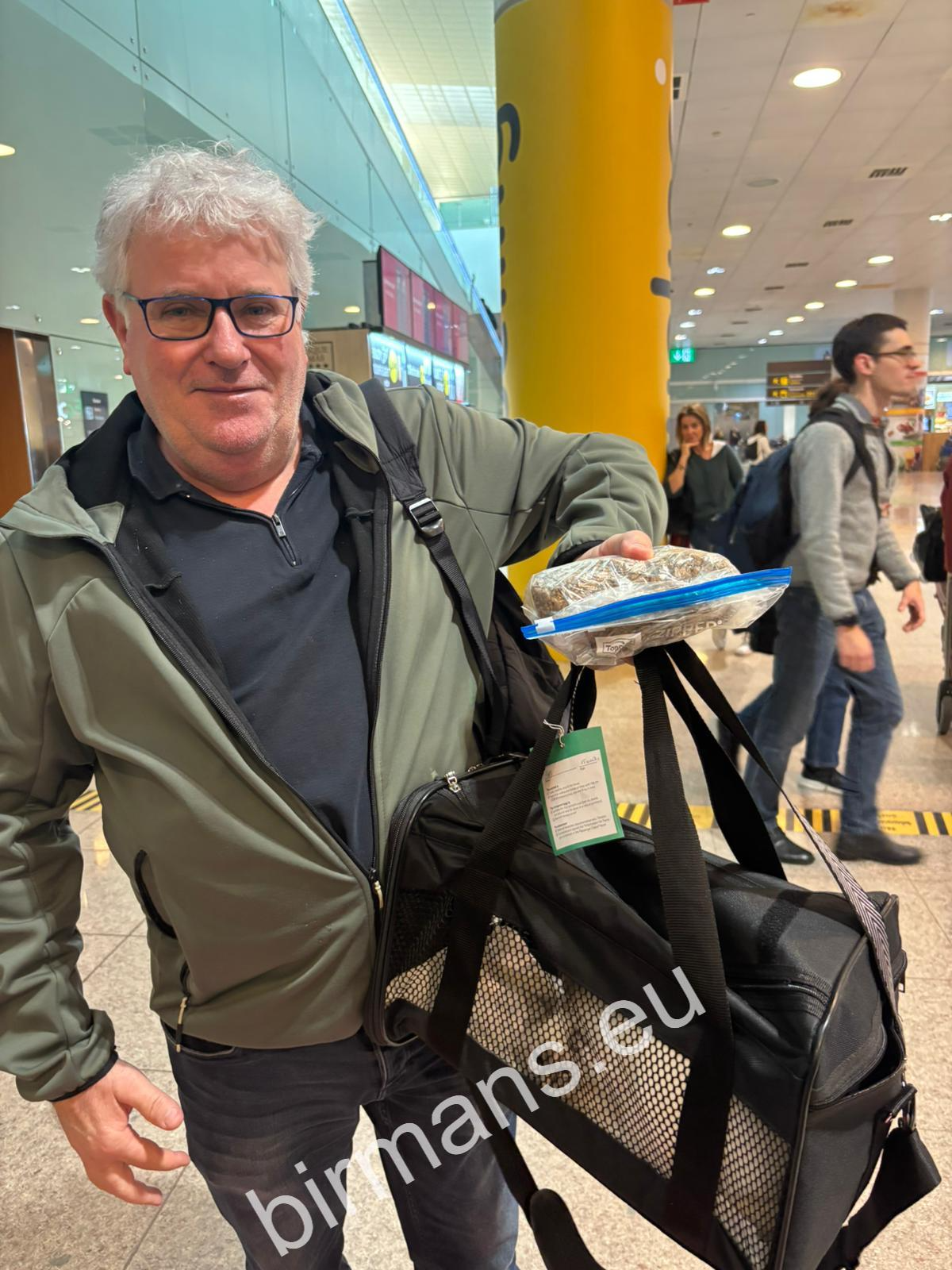
I’ve flown with cats on many occasions, and my experience is clear:
A properly prepared flight is usually simple, safe, and problem-free.
What matters most is that the owner knows what to expect.
Have the right carrier, know how the security screening works, and carry a few basic essentials.
Saba Birman Cattery also supports new owners with veterinary preparations and travel documentation.
This way, the first flight together isn’t a complicated task, but simply one part of coming home.
There’s no need to fear travel. Preparedness is exactly what allows us to set off calmly and confidently with our new family member.
Would you like a Saba Birman kitten too?
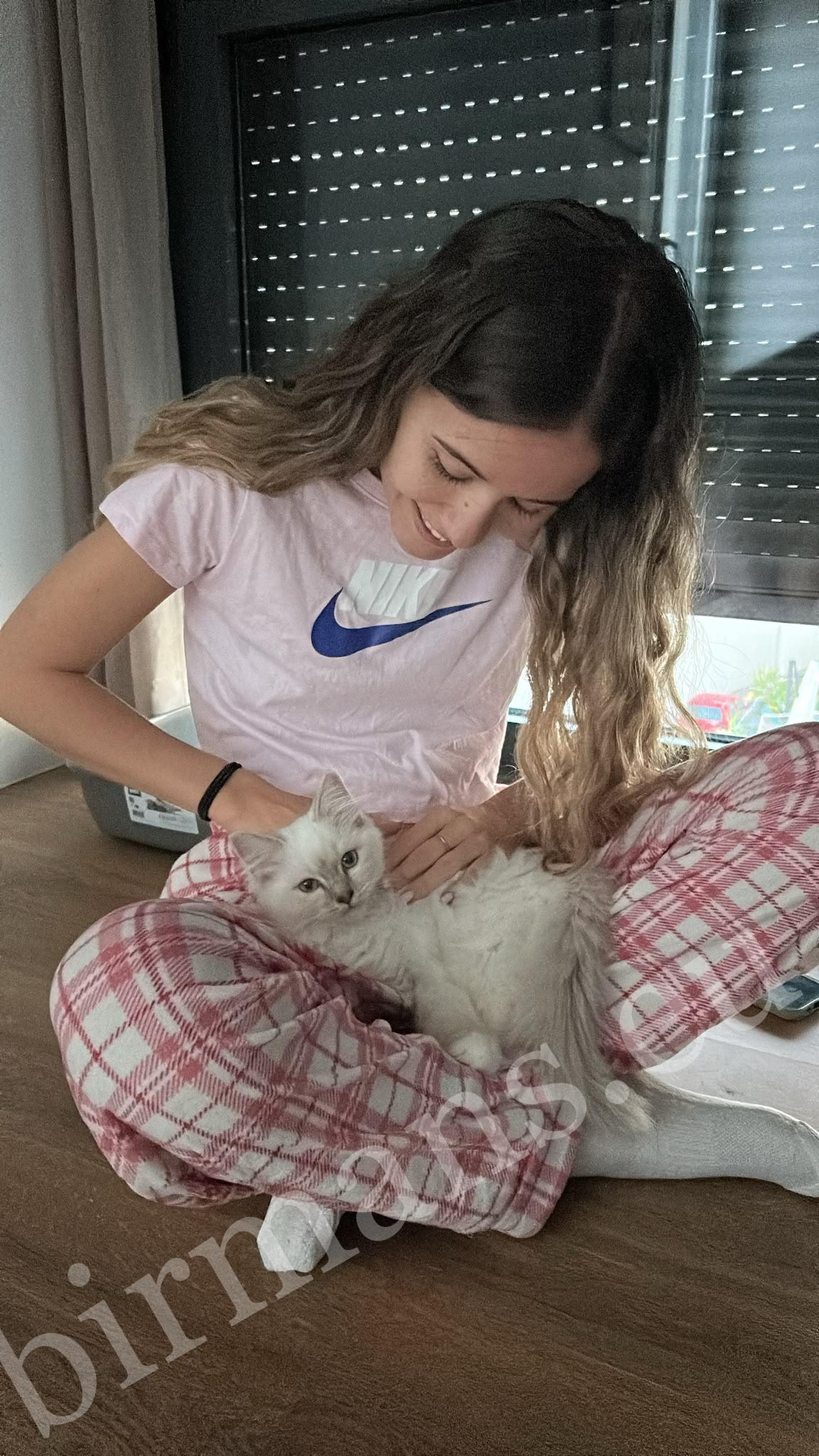
Our cattery’s international experience helps kittens reach their new families safely. We also provide support in organizing travel and preparing the necessary veterinary documentation.
Meet our Saba Birman kittens and current litter, or learn about our one-year reservation system.
Distance alone is never an obstacle to the right kitten finding the right family.
About the Author
Katalin Bodó is the founder and owner-breeder of Saba Birman Cattery. She is a biology-chemistry teacher and economist. Since 2012, she has been breeding, raising, socializing, and placing Sacred Birman cats with international families.